
The Illusion of Depth
On When Thinking Becomes a Closed System

There is a kind of thinking that feels serious.
It revisits the same questions. It searches for clarity. It insists on depth. From the inside, it feels like effort, even courage. From the outside, nothing moves.
I’ve watched people spend years in this state: intelligent, articulate people who can analyse their patterns with surgical precision. They know why they avoid intimacy, how their childhood shaped their risk tolerance, what keeps them circling the same career dissatisfaction. The analysis is often correct. And still, nothing changes.
Reflection and rumination are easily mistaken for each other. Both involve introspection. Both can last hours, months, years. Only one leads somewhere.
The confusion matters because rumination doesn’t feel shallow. It feels profound. It feels like going deeper. But often it’s just going in circles at increasing speed.
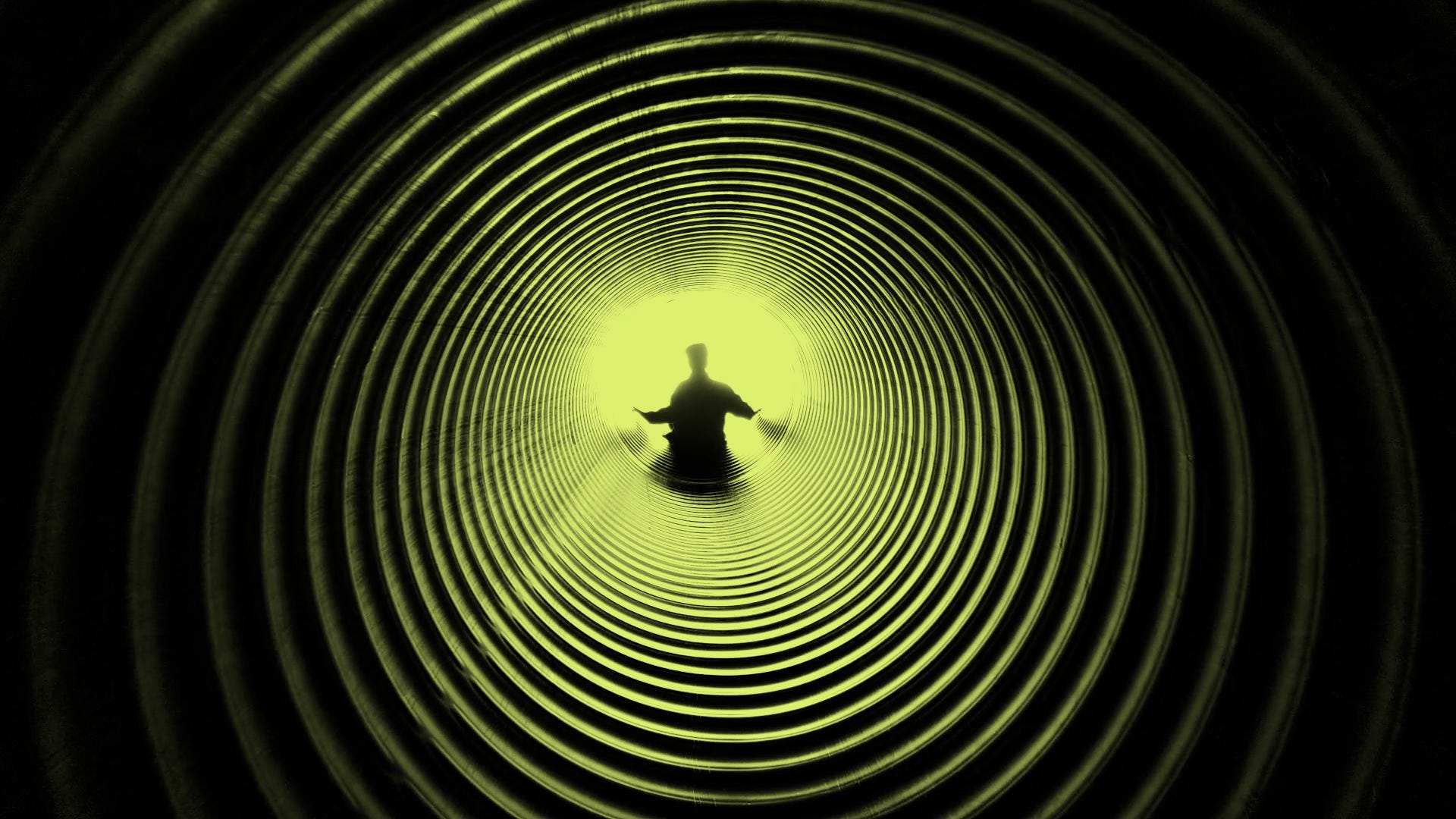
Rumination is a closed system.
It revisits the same thoughts without altering the structure that produces them. It asks why again and again without allowing an answer to settle. It generates insight-like language, the kind that sounds good in therapy or journal entries, but nothing changes in the world outside the mind.
Watch what happens: the thinker splits into observer and observed. One part acts, the other critiques. One part lives, the other monitors. You’re no longer inhabiting experience directly; you’re watching yourself have it, evaluating it, correcting it in real time.
You’ve replayed the conversation seventeen times. Each replay surfaces a new detail you should have noticed, a different tone you might have used, another way the whole thing could have gone. By the end, you’ve thought about the conversation more than you actually experienced it. The memory is worn smooth from handling.
This is rumination: watching the mind instead of living in the world.
And because it’s repetitive, it creates the illusion of depth. Familiarity starts to feel like excavation. Intensity starts to feel like progress. But your position hasn’t shifted. The loop tightens. The system stabilizes around the same tension.
Closed systems are very efficient at maintaining themselves.
Reflection works differently.
Reflection looks back in order to reorient forward. It has a stopping point, a moment where thinking yields back to movement. It doesn’t replace experience; it integrates it.
Where rumination seeks certainty, reflection settles for clarity. There’s a difference. Certainty tries to eliminate uncertainty altogether. Clarity accepts that uncertainty remains, but enough orientation has been found to act anyway.
Rumination protects you from being wrong. Reflection lets you move even if you are.
One freezes life. The other gives it direction.
Much rumination begins honestly. It starts as an attempt to understand a wound, a pattern, a recurring dissatisfaction. But when thinking becomes an end in itself, it slowly detaches from risk. The world becomes something to analyze rather than engage.
The question “When does it stop?” often emerges here. When will the emptiness end? When will the clarity arrive? When will I finally feel coherent?
But thinking that never re-enters life can’t answer those questions. It can only rehearse them.
After all that thinking, has your position in the world changed?
Have you acted differently? Spoken differently? Risked something? Allowed something unresolved to remain unresolved while you moved anyway?
If not, the thinking may be reinforcing the structure it’s trying to escape.
This is why rumination feels deep but leaves you exhausted. It consumes energy without creating movement. It maintains a closed loop where the same internal architecture stays perfectly intact.
Reflection interrupts the loop. It changes the structure. It accepts that clarity is partial, that movement may feel premature, that resolution often follows action rather than preceding it.
Depth isn’t measured by how long you think.
It’s measured by whether thinking reopens the world.
When thought becomes a closed system, it protects you from uncertainty, but also from transformation. When thought becomes reflective, it does something riskier: it releases you back into life before everything feels resolved.
The difference isn’t intensity.
It’s trajectory.
Modern Intuitions is an ongoing exploration of symbolic thinking, decision-making and cognitive structure. Subscribe if you’d like to follow its unfolding.